

Case study 01 / Windows desktop
dlME
A compact Electron product with resilient analysis, local files, explicit formats, and release-grade verification.
Conceptual artwork / product evidence follows

Product direction, interface, implementation, verification, and publication by Kirsten Trimaley.
I use AI to explore and accelerate, but I own the product decisions, the verification, and the responsibility for what ships.
- Release
- v0.9.1 prerelease Windows executables are unsigned
- Verification
- 32 tests + packaged smoke
- Recovery
- Cookie-free retry for public media
The real product
Built to be used,
not just viewed.
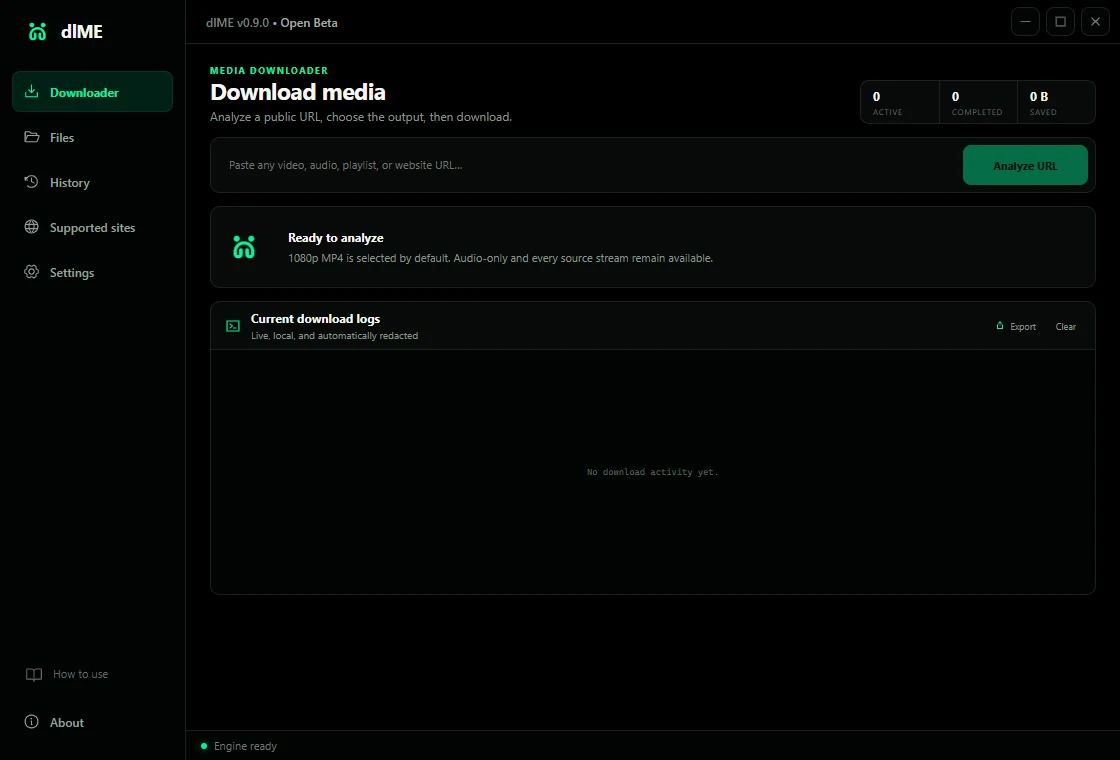
A local Windows media downloader that turns a pasted public-media URL into a clear, inspectable download workflow.
Complete application frame · source aspect ratio preserved · privacy-safe data
What I changed
- Reshaped the product into a compact, legible Windows workspace with clear downloader, files, history, and support surfaces.
- Built and tested the browser-cookie recovery path, release checks, packaging documentation, and public source boundaries.
Boundaries first
- Downloads stay local and logs must not expose Windows profile paths or credential-shaped values.
- The app combines MIT application code with separately licensed yt-dlp and GPL-enabled FFmpeg components.
Decisions
- Retry recognized Chromium cookie-access failures once without cookies for public media, then explain the remaining authentication boundary.
- Keep analysis, format choice, live logs, and saved files visible without turning the product into a dense developer console.
Proof of work
- The 0.9.1 prerelease includes a corresponding-source package and audited engine source parts.
- The verified 0.9.1 engine snapshot reported 1,752 supported extractors alongside type checking, production build, 32 tests, packaged MP4 and MP3 flows, and legal-surface checks.
What comes next
Continue tightening signed-distribution readiness and keep upstream media-engine versions and source packages reproducible.
Discuss a project